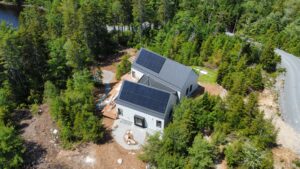
Premier Tim Houston wants to turn Nova Scotia into an energy superpower (source). When he reshuffled his cabinet on October 21 — adding “Minister of Energy” to his own title — he made it clear that clean, local energy is central to that vision.
“I want to turn Nova Scotia into an energy superpower,” Houston said. “Responsible resource development will power the economy, combat poverty, and help Nova Scotians earn more money.”
With electricity demand rising due to electrification and climate change, the province’s ambitions align with Ottawa’s target of a net-zero grid by 2035.
The Transition Is Underway
Nova Scotia’s Environmental Goals and Climate Change Reduction Act (2021) requires that 80% of electricity come from renewables by 2030 and that coal be phased out entirely.
The 2023 Clean Power Plan commits to nearly 2 GW of new wind, solar, and battery storage, alongside transmission upgrades and a 90 % cut in power-sector emissions by 2035.
While large-scale wind will provide much of that capacity, solar power brings flexibility, local jobs, and real energy independence — benefits that directly impact Nova Scotians today.

A New Era of Energy Governance
In 2024 the province passed the Energy Reform Act, creating a new Independent Energy System Operator (IESO) to manage planning, procurement, and operations.
This shift removes a long-standing conflict of interest: Nova Scotia Power previously both operated the grid and competed with private developers. With an independent IESO, the market can become more transparent, giving homeowners, municipalities, and small businesses a fairer chance to participate in the clean-energy economy.
Solar Power Today: Proven, Affordable, Growing Fast
Nova Scotia isn’t as cloudy as many assume. With 1,800–2,000 hours of sunshine per year, it rivals parts of Germany’s thriving solar market.
Solar now offers clear benefits:
Lower bills: Net-metered homes offset consumption and earn credits for surplus power.
Cleaner air: Every kilowatt generated cuts emissions and coal reliance.
Local jobs: Installers, electricians, and maintenance crews drive a growing clean-energy economy.
More than 6,000 households have installed solar through the SolarHomes program, collectively saving $12.5 million per year and cutting over 32,000 tonnes of CO₂.
Even without rebates, systems still pay for themselves in 8–12 years thanks to high electricity rates. Over 4,000 homes already feed surplus power to the grid.
Houston’s Track Record: Standing Up for Solar
In 2022, Nova Scotia Power proposed a System Access Charge (SAC) of $8 per kilowatt per month on net-metered systems — a move that would have doubled payback times and stalled adoption.
The Houston government blocked the fee within a week, protecting thousands of solar customers and hundreds of local jobs.
That quick action, combined with expanding commercial net-metering limits and formalizing self-generation rights, demonstrated a clear commitment to keeping renewable energy growing.

Offshore Wind and the Big Picture
While solar energizes homes and small businesses, offshore wind represents Nova Scotia’s next major leap.
Through the Wind West initiative, the province aims to unlock up to 62 GW of offshore wind — roughly a quarter of Canada’s current installed capacity. The first 5 GW phase could drive $45–$75 billion in private investment and supply clean power across Atlantic Canada and the northeastern U.S.
But those megaprojects will take time; no electricity from offshore wind is expected before the 2030s. Solar, by contrast, can deploy now, helping meet 2030 targets and training the skilled workforce these large projects will depend on.
Challenges Ahead — and Opportunities
Grid stability: Batteries, upgraded transmission, and fast-acting gas turbines will balance solar and wind.
Policy continuity: Incentives like SolarHomes and Greener Homes have ended; replacing them with predictable, long-term programs is essential.
Solar for everyone: The idea of community solar is strong — but execution matters. The current program has struggled to deliver meaningful participation, leaving multi-unit residential buildings on the sidelines. To truly lead in clean energy, Nova Scotia needs simpler, better-designed pathways for shared solar ownership and local benefit.

The Path Forward
To realize the vision of a clean-energy superpower, Nova Scotia should:
Guarantee long-term policy certainty.
Replace short-term rebates with stable, predictable frameworks and protect net-metering rules.
Expand practical solar access.
Improve commercial program design so that multi-unit residential buildings can participate directly.
Invest in storage and infrastructure.
Fast-track grid-scale batteries and strengthen inter-ties with New Brunswick and beyond.
Align offshore and onshore development.
Use revenue from large projects to support local solar adoption and workforce training.
Train and transition the workforce.
Expand clean-energy programs at Nova Scotia Community College and retrain workers from fossil industries.
A Brighter Future, Powered by Nova Scotians
Nova Scotia has the sunshine, talent, and political will to lead Canada’s clean-energy transition.
Solar power may not replace offshore wind, but it’s the most immediate and empowering solution — cutting emissions today, lowering bills, and building the local expertise needed for tomorrow’s megaprojects.
With steady policy, smart investment, and genuine community participation, Nova Scotia can truly become the energy superpower Premier Houston envisions.